Last updated November 22, 2026
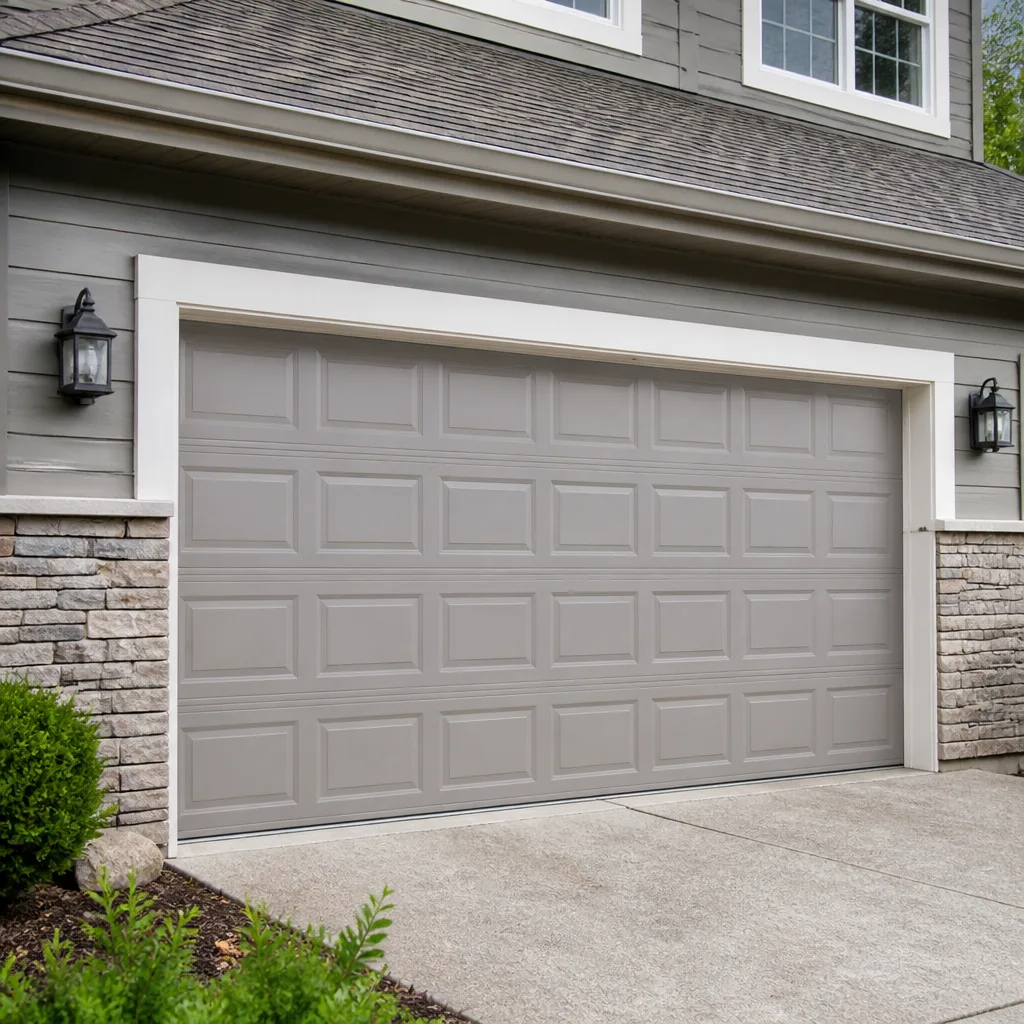 Raised-panel steel
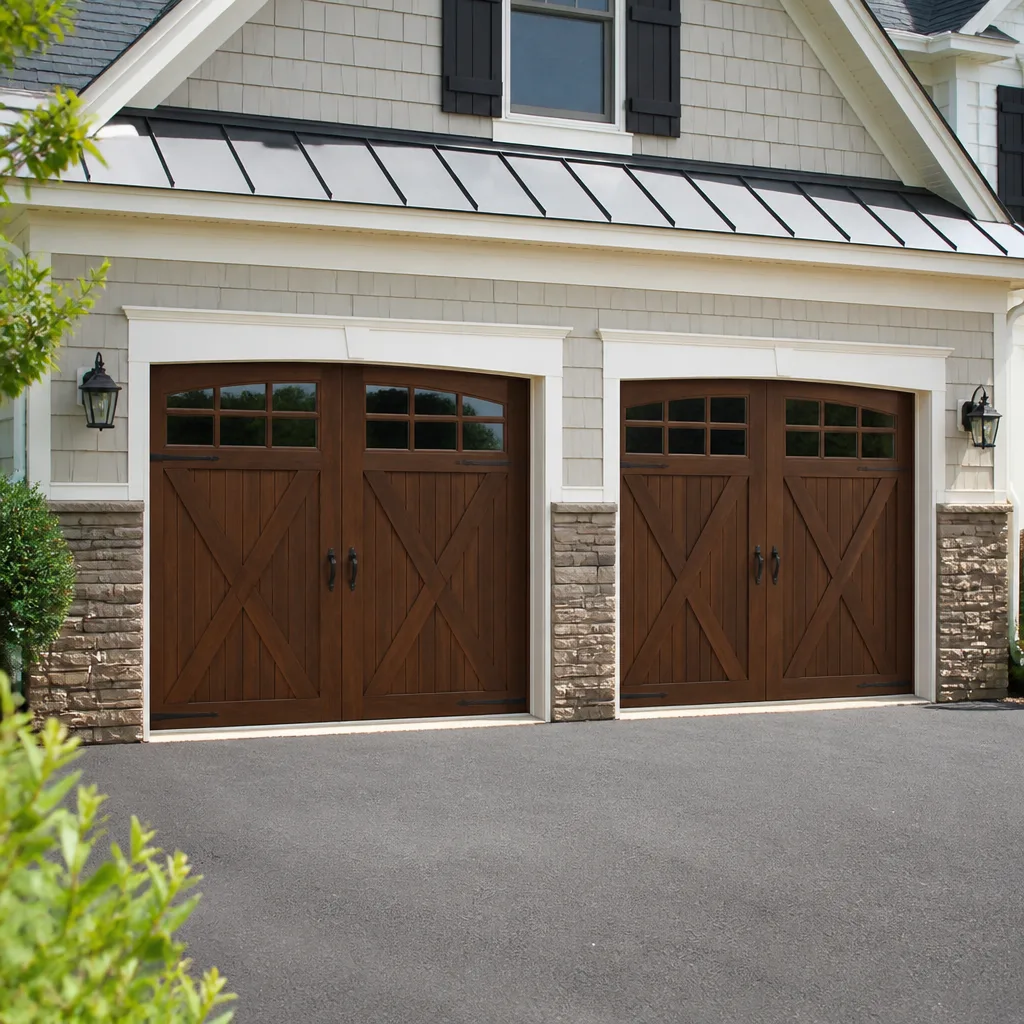 Carriage house
 Modern flush
 Full-view glass
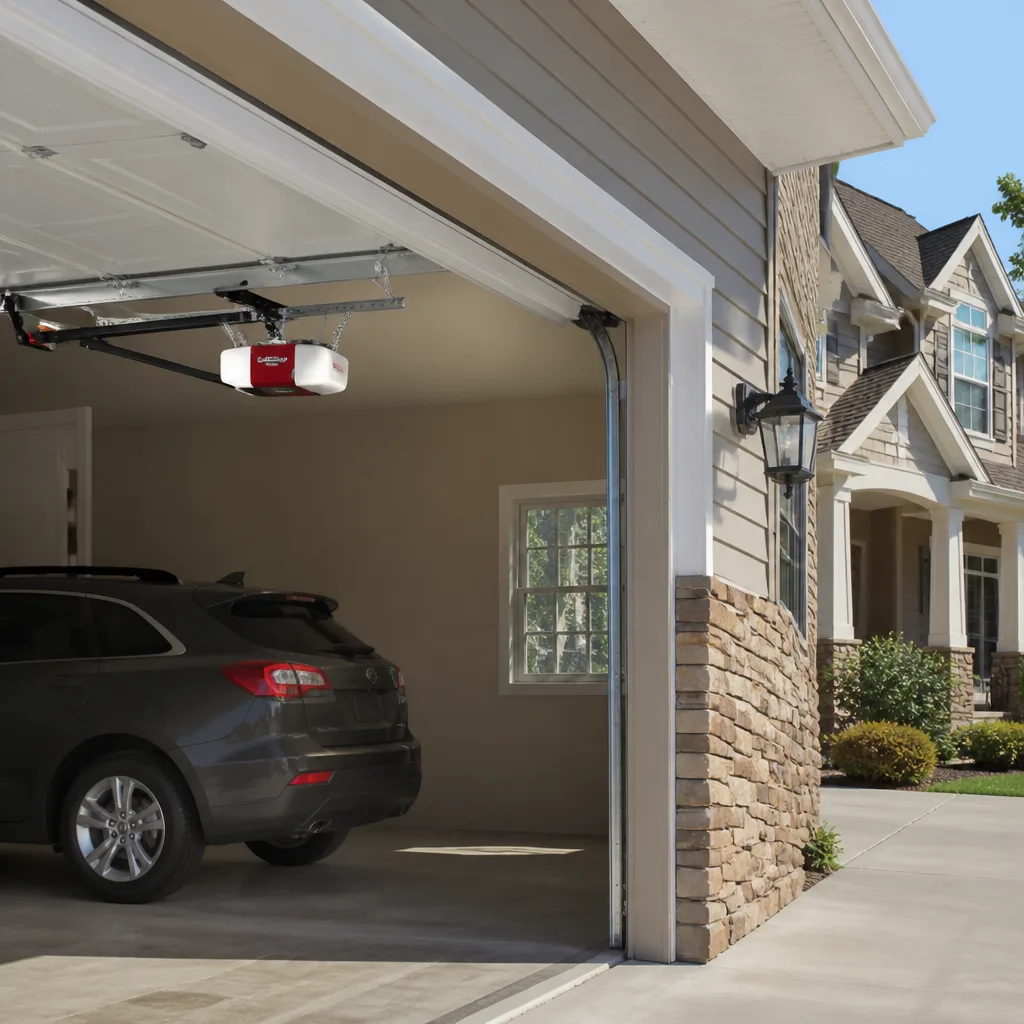 LiftMaster openers
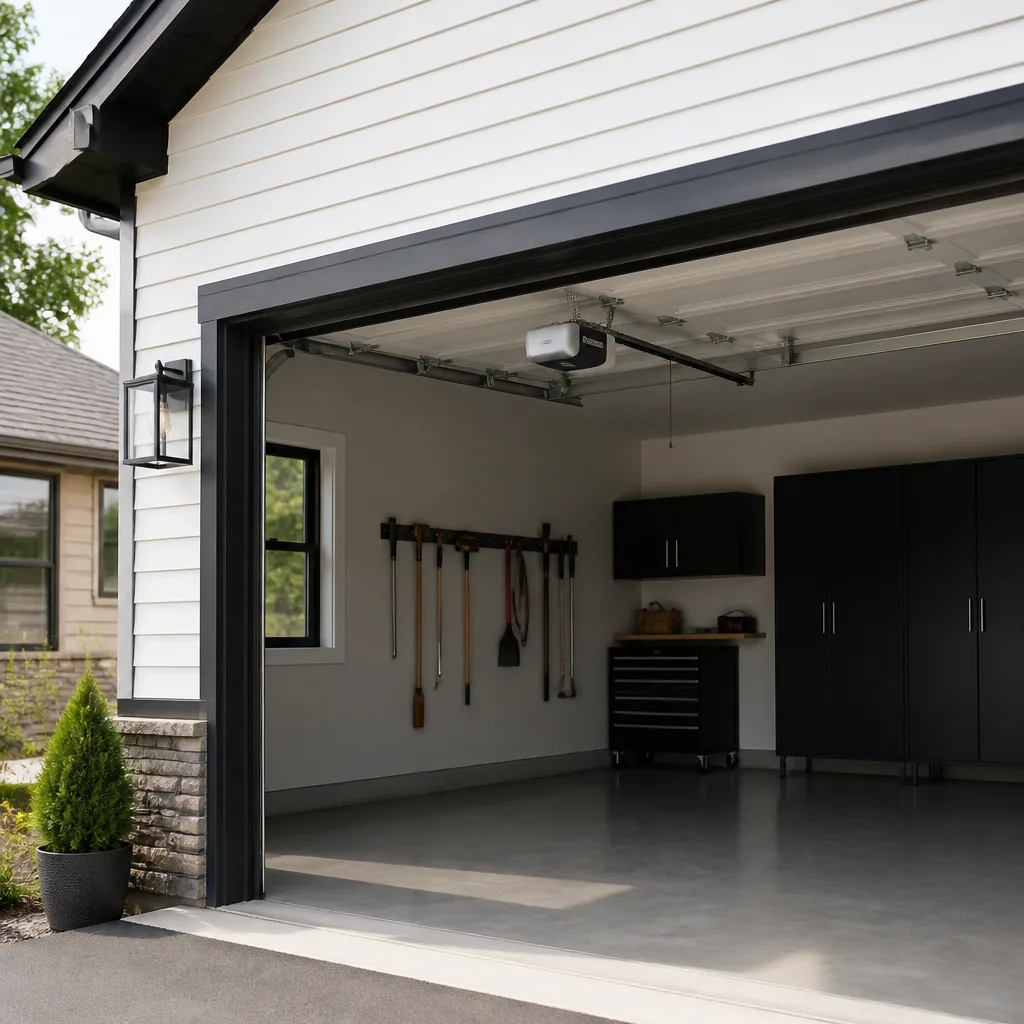 Chamberlain openers
Full 25-point door and opener safety check with every visit - springs, cables, rollers, tracks, and your LiftMaster or Chamberlain opener included
You get a price before we start. It does not change when the pro arrives.
Get your free estimateDIY vs Professional Garage Door: The Port Saint Lucie Homeowner’s Decision Guide
Torsion springs store enough energy to cause serious injury when they release. That single fact settles the DIY debate for a large share of garage door repairs, and it shapes how we talk about this with Port Saint Lucie homeowners. But it doesn’t settle the whole question. There’s a shorter list of tasks where a confident homeowner can safely handle the job and skip the service call entirely. This guide draws the line clearly: which repairs are genuinely safe to do yourself, which ones require a licensed professional in Florida, and why a door replacement here runs into permitting rules that catch capable DIYers off guard. You’ll come away knowing exactly where your door falls.
Quick Answer
In Port Saint Lucie, lubrication, safety-sensor alignment, and remote reprogramming are safe for most homeowners to do themselves. Spring replacement, cable work, and full door installation should go to a licensed professional. Florida permitting rules add a legal layer to door replacement that most DIY guides ignore, and an unpermitted door can complicate a wind-insurance claim. The dividing line comes down to stored energy and code compliance.
Styles & brands we work with
- Raised-panel steel
- Carriage house
- Modern flush
- Full-view glass
- LiftMaster openers
- Chamberlain openers
Table of Contents
- What Repairs Are Actually Safe for a Port Saint Lucie Homeowner?
- Which Tasks Require a Licensed Professional in Florida?
- How Do Florida Permits Change the DIY Door Replacement Question?
- DIY vs Professional Cost: What Do You Really Save?
- How Do You Prepare for a DIY Maintenance Session?
- What Routine Garage Door Maintenance Makes Sense in Port Saint Lucie?
- When Is Opener Repair a DIY Job and When Isn’t It?
- Does Your Door’s Brand Change the DIY Calculus?
What Repairs Are Actually Safe for a Port Saint Lucie Homeowner?
A handful of garage door jobs involve no stored spring energy and no electrical hazard, and those are the ones we tell homeowners they can handle. If your remote stops working, your door reverses for no reason, or it starts squealing on the way up, you likely don’t need to call anyone. The tasks below are the safe list.
- Lubrication: Apply a garage-door-specific lubricant (not general WD-40) to hinges, rollers, and the tracks. Rollers with sealed bearings get a light coat; open rollers need a few drops in the bearing.
- Safety-sensor alignment: If the door reverses immediately after closing, check that the two photo-eye sensors near the floor point at each other. Wipe the lenses and nudge them back into line.
- Remote and keypad reprogramming: Most openers reset by holding a button on the motor head and re-pairing the remote. The manual for your specific opener has the sequence.
- Track cleaning and obstruction removal: Clear debris from the tracks and wipe them down. Never bend a track back into shape yourself; misaligned tracks put load on the springs.
- Weatherstripping replacement: The bottom seal slides off its retainer and a new one slides on. No spring tension involved.
- Visual inspection: Look at cables for fraying, springs for gaps, and hinges for cracks. You’re checking, not repairing, which is the safest thing a homeowner can do.
None of these require a permit, a licensed technician, or anything beyond a ladder and basic tools. They’re also the tasks that prevent bigger failures, which is why they’re worth doing on a routine schedule. We handle everything on the other side of this line, including full garage door repair for the jobs that shouldn’t be DIY.
Which Tasks Require a Licensed Professional in Florida?
Anything that releases stored energy or supports the door’s weight belongs in professional hands. Torsion springs, extension springs, cables, drums, and bottom brackets all hold forces that can cause severe injury in an instant. We’ve seen homeowners get this line wrong, and the consequences are the reason we take it seriously.
- Torsion spring replacement. A torsion spring is wound to a specific tension and held by set screws. Loosening it without the right winding bars and technique is where most serious DIY injuries happen.
- Extension spring replacement. Extension springs store less energy than torsion springs, but a snapped one whips with enough force to break bones. They also need safety cables that meet current standards.
- Lift cable replacement. Cables work under tension and run through drums. A cable that slips while you’re adjusting it can take a finger.
- Panel and section replacement. Replacing a damaged section means releasing spring tension and rebalancing the door. Clopay and Amarr panels fit specific models, so the wrong parts can leave the door unsafe.
- Full door and opener installation. This is both a mechanical and a permitting job, which we cover in the next section.
- Any work on a door that won’t balance. If the door feels heavy at the halfway point or slams closed, that’s a spring or cable problem, not a track problem.
Our technicians have up to 10 years of experience, and spring work is a named service we do every day. When your safety is on the line, that matters more than a saved service call. Call (833) 932-4537 and we’ll give you a straight answer about what your door needs.
How Do Florida Permits Change the DIY Door Replacement Question?
Replacing a garage door in Port Saint Lucie is generally a permitted job, and this is where a capable homeowner can get into trouble without touching a spring. Florida’s building code treats the garage door as part of the home’s wind-resistance envelope, which means the door and its installation have to meet specific standards. Ask the city’s building department about the current requirement for your address before you buy a door.
The practical problem is what happens during a wind event. If an unpermitted door fails and damages the home or a neighbor’s property, the insurer will look at whether the work was done to code. A door installed without the required permit and inspection can become a coverage problem at exactly the worst moment. That’s not a story we’re inventing; it’s how building departments and insurers treat unpermitted structural work.
Here’s what a compliant install involves in Port Saint Lucie:
- A door rated to the wind-load requirements your address falls under.
- Correct anchor spacing and reinforcement into the framing, not just the sheathing.
- An inspection by the city before the job is closed out.
- Paperwork the homeowner keeps in case of an insurance claim or a future sale.
Most homeowners can’t sign off on their own permitted install, which is why we handle garage door installation with the permit and inspection built into the job. It’s the single clearest case where DIY isn’t just risky, it’s legally problematic.
DIY vs Professional Cost: What Do You Really Save?
The savings from DIY depend entirely on which category the job falls into. For lubrication, sensor alignment, and remote programming, DIY saves the entire service call and takes under an hour. For spring or cable work, the math changes because a failed DIY attempt usually means paying a professional to fix it correctly plus the cost of the parts you damaged getting there.
We don’t publish fixed prices because every door is different, but we can lay out how the comparison works. What you pay a professional is a quoted, upfront number you agree to before any work starts. What you save by doing it yourself is only real if the job goes right the first time.
| Task | DIY Reality | Professional Reality |
|---|---|---|
| Lubrication | Low cost in supplies, safe to do | Usually folded into a service visit |
| Sensor alignment | Free, 10 minutes, safe | Unnecessary if you fix it yourself |
| Remote programming | Free with the opener manual | Unnecessary if you fix it yourself |
| Spring replacement | High injury risk, no real savings | Quoted upfront, matched parts |
| Cable replacement | Dangerous, often compounds the damage | Quoted upfront, door rebalanced |
| Full door install | Permit and inspection problem | Permitted, inspected, wind-rated |
The honest advice: do the safe list yourself, and call for the rest. A free estimate costs you nothing but a conversation. Call (833) 932-4537 and we’ll tell you what your door actually needs before you spend a dime.
How Do You Prepare for a DIY Maintenance Session?
Before you touch anything on your door, get the workspace and the right supplies in order. A little prep keeps a simple maintenance job from turning into a repair call. Here’s how to set up a safe session.
- Disconnect the opener. Pull the red release cord so the door is on manual operation. This keeps the motor from engaging while you work.
- Raise the door fully and check it holds. If the door drifts down on its own, stop. That’s a balance problem a professional should look at, not something to work around.
- Gather the right lubricant. Use a garage-door-specific spray (often a white lithium or silicone blend). Skip general-purpose WD-40, which attracts dirt and dries out.
- Have a stable ladder and a helper. Have someone nearby when you’re on a ladder, even for a short job.
- Check the springs and cables before anything else. Look, don’t touch. Note any gaps in the springs, fraying on the cables, or rust at the bottom brackets.
- Test the safety reverse. After any maintenance, put a block of wood under the door and confirm it reverses on contact. This is your non-negotiable final check.
If anything you check looks off, put the tools away and call. We work on the brand you already own, whether that’s a Clopay door or a Wayne Dalton system, and parts on hand means the fix doesn’t stall waiting on an order. Call (833) 932-4537 for a free estimate.
What Routine Garage Door Maintenance Makes Sense in Port Saint Lucie?
The climate here is warm and humid for most of the year, which puts different wear on a garage door than a colder market. Humidity works on metal parts and can leave tracks and hinges prone to sticking, so lubrication matters more often than the annual schedule you see in national guides. We suggest checking and lubricating moving parts a few times a year rather than once.
Because Port Saint Lucie homes often use the garage as the main entry, the door cycles more than a typical front door, which means the opener and springs do more work. Watch for these signs and treat them as maintenance cues, not reasons to repair yourself:
- Grinding, squealing, or popping during operation.
- The door reversing without an obstruction.
- The opener straining or the door moving unevenly.
- A gap or rust on the springs.
- The door feeling heavier than it used to at the halfway point.
Every one of those is a signal to schedule a professional inspection. Catching a worn spring before it breaks is cheaper and safer than dealing with a snapped one and a car trapped inside. Our technicians have up to 10 years of experience reading exactly these signs. Call (833) 932-4537 to book a free estimate.
When Is Opener Repair a DIY Job and When Isn’t It?
Opener problems sit in a middle zone. Reprogramming a remote or re-pairing a keypad is a DIY job. But diagnosing a motor that won’t run, a gear that strips, or a logic board that’s failed requires brand-specific knowledge, and that’s where we get involved. Opener repair spans both legacy drive systems and modern Wi-Fi-connected models from LiftMaster, Chamberlain, Craftsman, and Genie.
A quick way to sort your own situation:
- Do it yourself: The remote won’t pair, the keypad code won’t save, or the wall button works but a remote doesn’t.
- Call a professional: The motor runs but the door doesn’t move, the door reverses, the opener clicks and stops, or you hear grinding from the unit.
- Stop and call: The opener is hot to the touch, trips the breaker, or sparks.
One thing to rule out first: if the opener seems broken but the door is the real problem, the fix isn’t in the motor. A door that’s out of balance makes even a healthy opener struggle. We check both the opener and the door in one visit so you’re not paying twice. Call (833) 932-4537 for garage door opener repair and we’ll sort out which part is actually failing.
Does Your Door’s Brand Change the DIY Calculus?
Your brand changes which parts fit and which manuals you’ll need for remote programming, but it doesn’t change the safety rules. A torsion spring is dangerous whether it’s on a Clopay, Amarr, Wayne Dalton, or Craftsman door. What the brand does change is the availability of parts and the specific procedures, which is why knowing your door’s make matters before you start.
Find the label on the door panels or the opener motor head. That tells you the model, and the model tells you which parts are correct. For homeowner-safe tasks, the brand mostly affects remote programming (each opener brand has its own pairing sequence) and weatherstripping (the retainer style varies). For anything on the professional list, brand knowledge is what lets a technician arrive with the right spring, cable, or panel.
We work on the brand you already own. We’re factory-familiar with eight major brands, including LiftMaster, Chamberlain, Genie, Clopay, Amarr, Wayne Dalton, Craftsman, and Raynor, and we supply our own parts so a repair doesn’t stall. That’s a different service than a general handyman who has to call around for your Clopay panel. When you’re ready for a door that’s built for your model rather than a generic fix, call (833) 932-4537 for a free estimate.
Common Mistakes to Avoid
- Winding a torsion spring without the right tools. Two proper winding bars and the correct technique aren’t optional. A slip can cause serious injury in a fraction of a second.
- Ignoring the permit on a door replacement. A permitted, wind-rated install protects you at claim time. Skipping it in Port Saint Lucie can turn a valid claim into a fight with your insurer.
- Using general WD-40 as a lubricant. It cleans but doesn’t lubricate moving parts and attracts grit. Use a garage-door-specific product on hinges and rollers.
- “Fixing” a bent track with a hammer. A track that’s out of line puts extra load on the springs and opener. Bending it back by eye usually makes the alignment worse.
- Disconnecting the opener and forgetting to reconnect. After any maintenance, re-engage the release and test the safety reverse before you trust the door again.
- Buying a door based on looks alone. Wind-load rating and permit requirements in Port Saint Lucie should drive the decision, not just the panel style.
- Waiting on a loud spring because it still works. Noise and gaps mean wear. Replacing a worn spring is far cheaper than the fallout from a snapped one.
See the difference
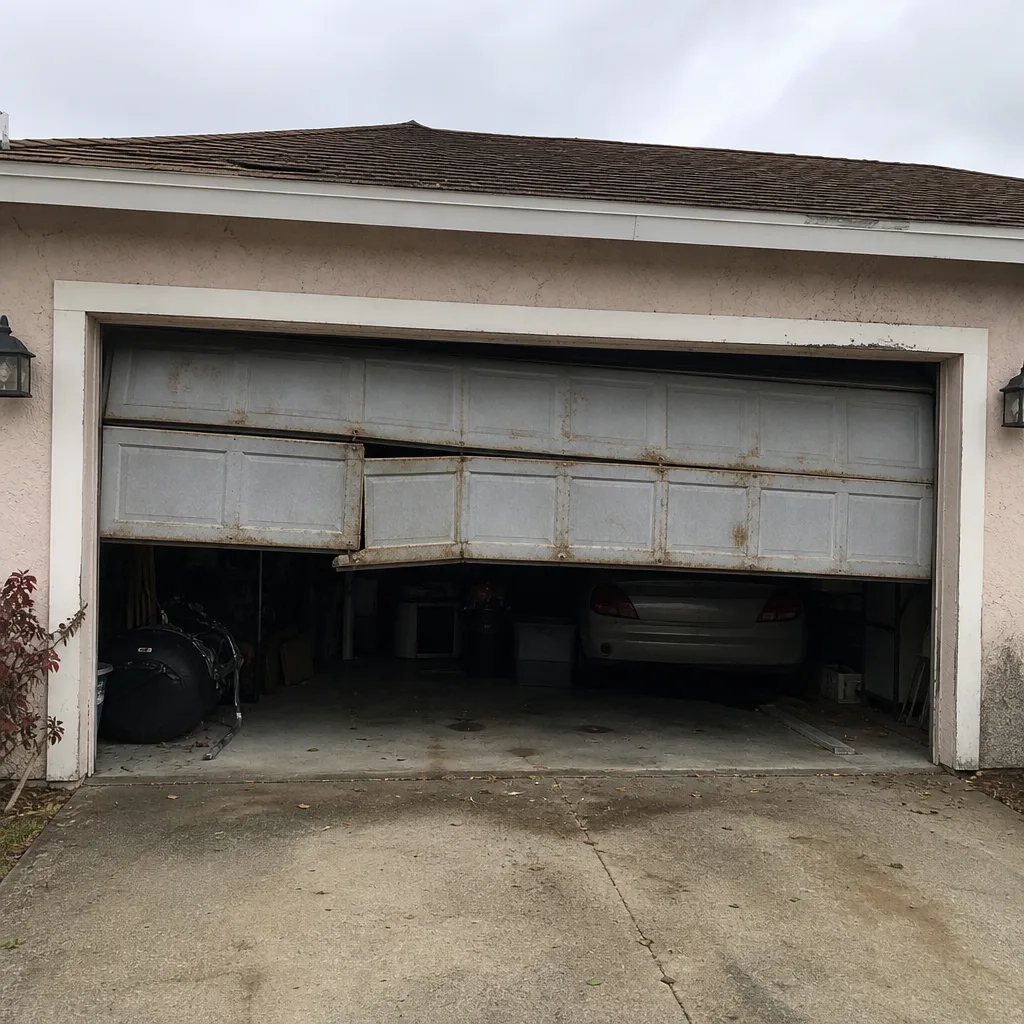 Before
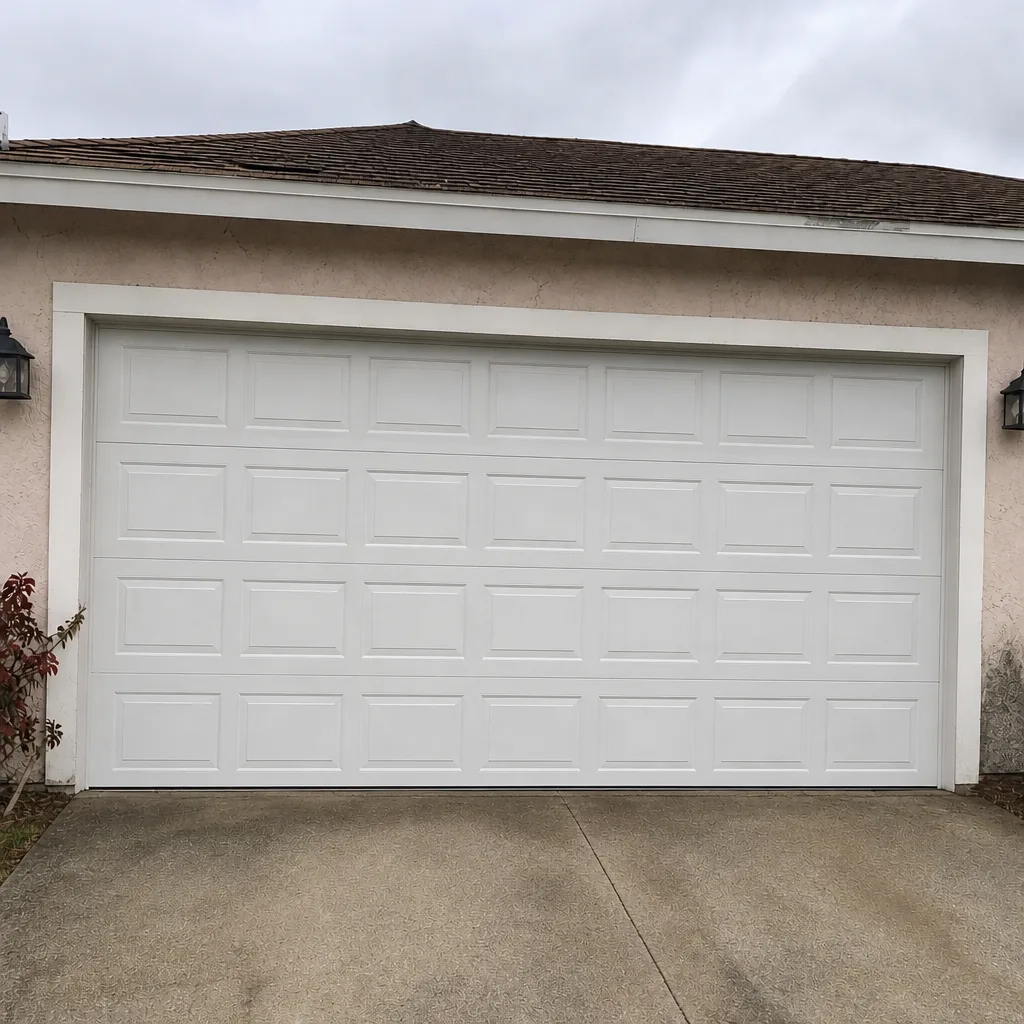 After
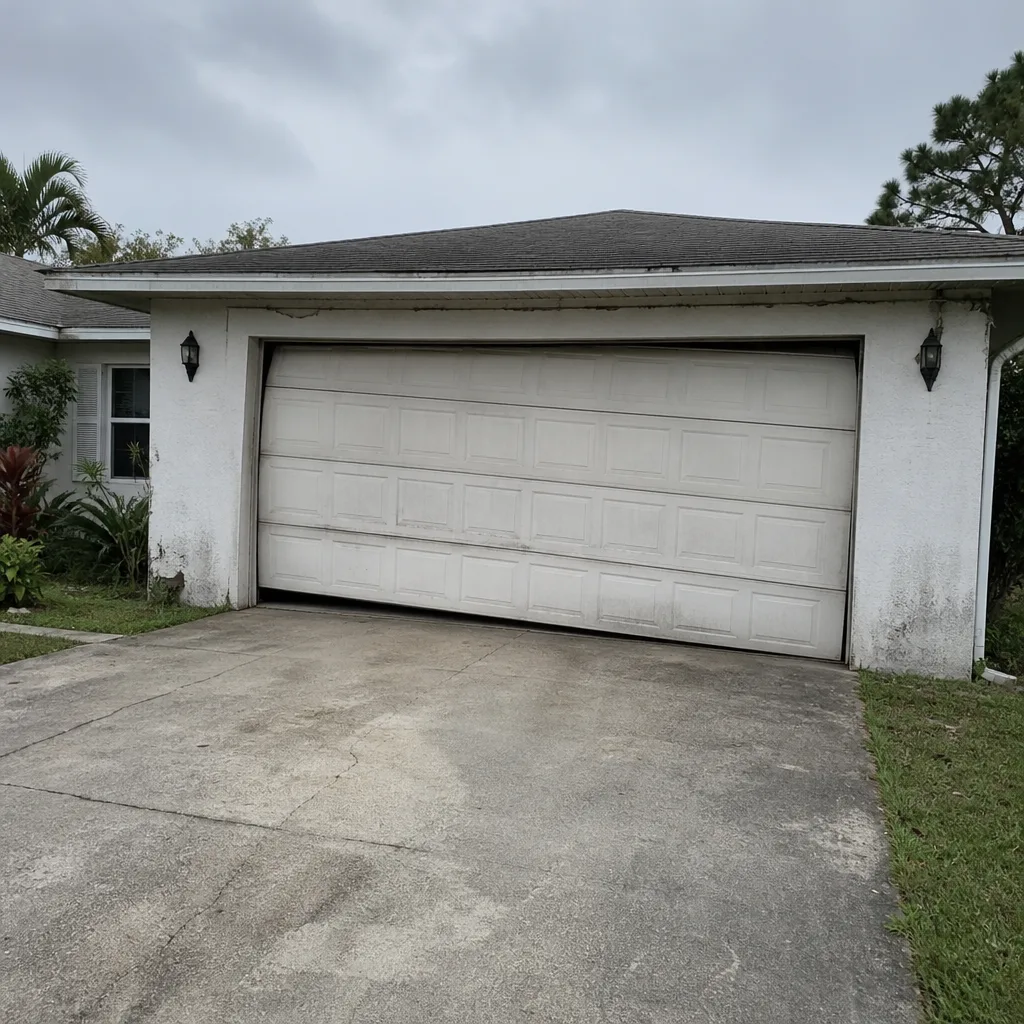 Before
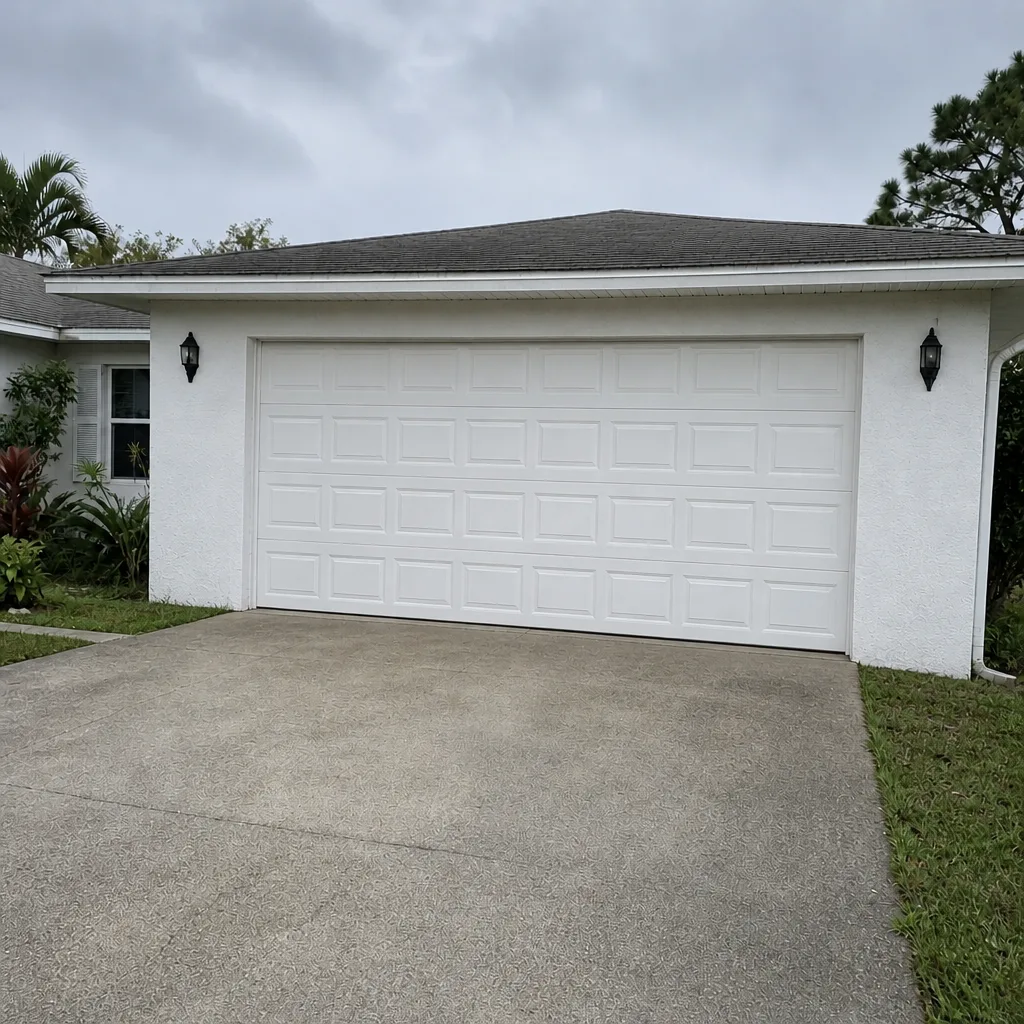 After
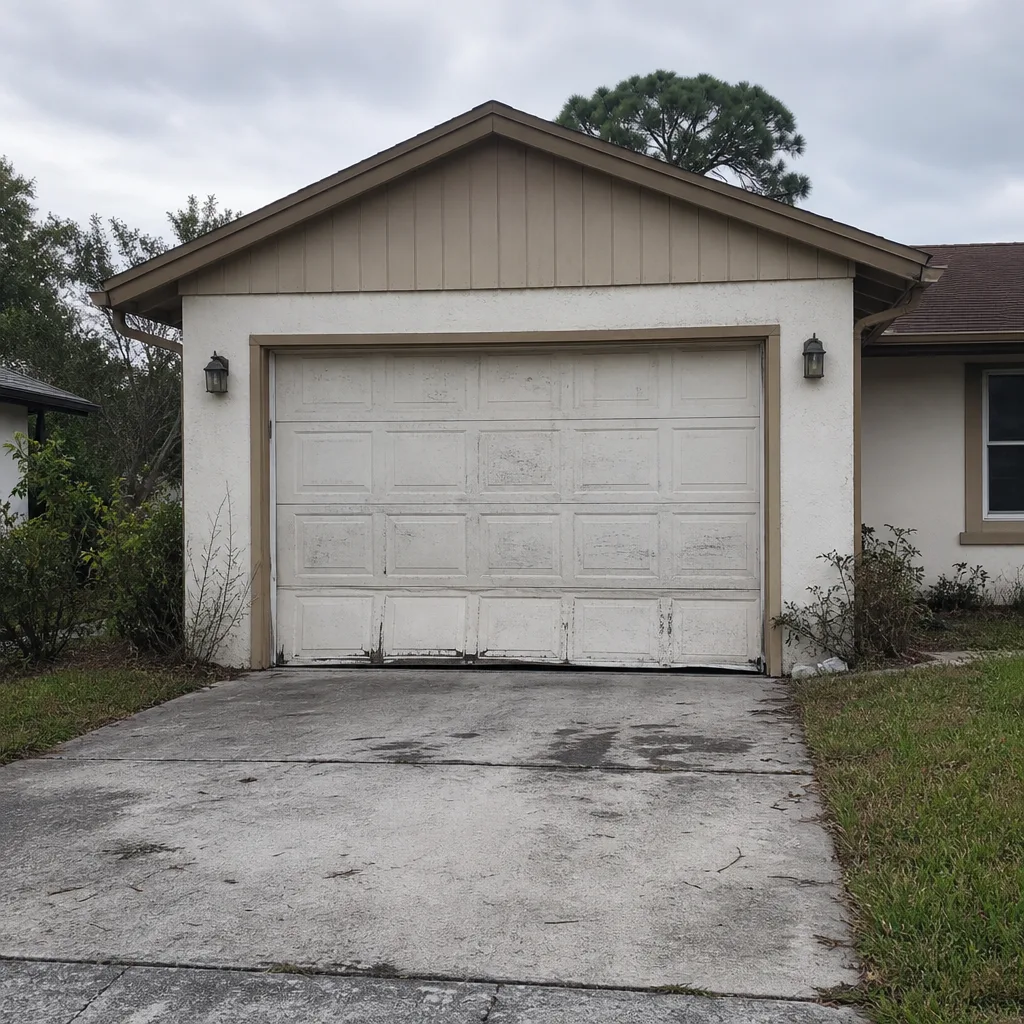 Before
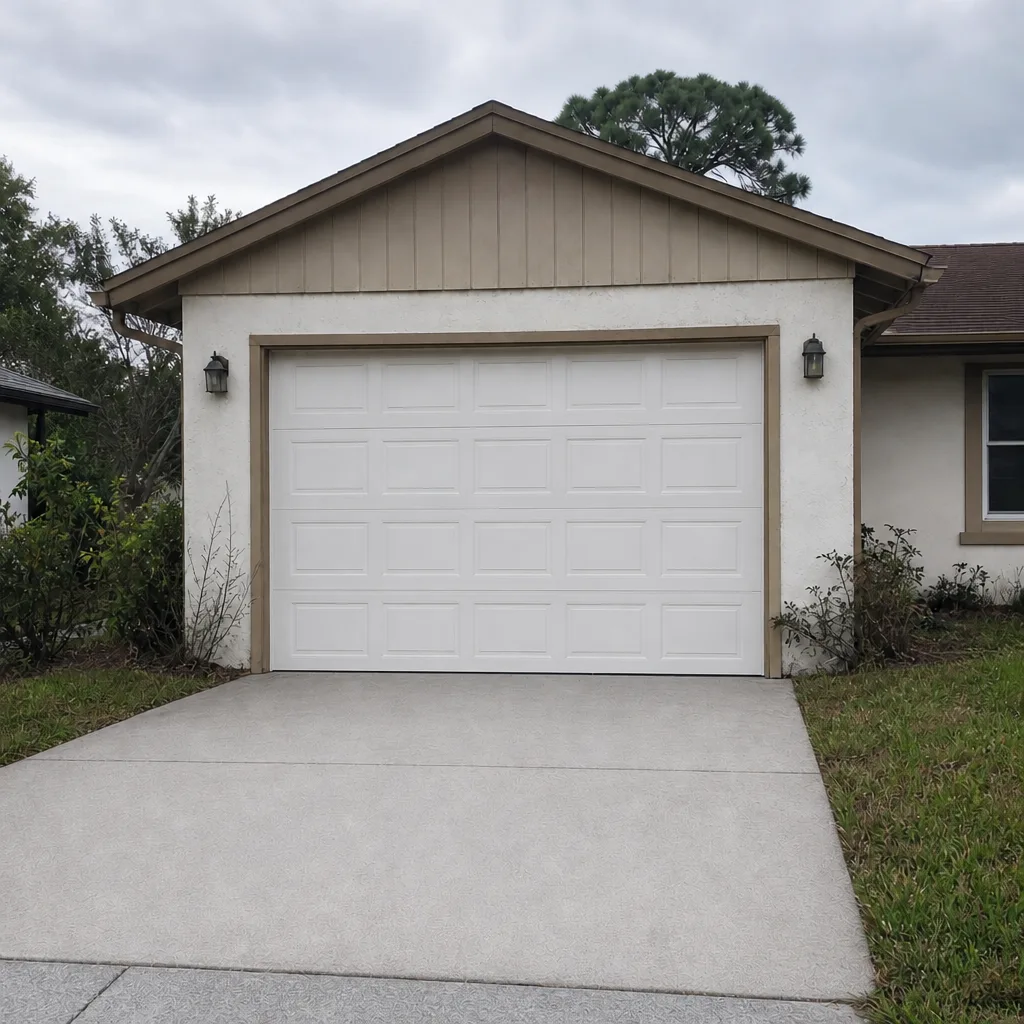 After
When to Call a Professional
Call a professional for anything involving springs, cables, drums, bottom brackets, panel replacement, full door installation, or an opener that sparks, overheats, or trips a breaker. Also call if the door is out of balance, moves unevenly, or reverses for no reason after you’ve checked the sensors. These aren’t tasks to attempt with a friend and a YouTube video. Port Saint Lucie Garage Door Repair Co offers free estimates in Port Saint Lucie, and we quote and agree the price before any work starts. Call (833) 932-4537. We’re open Sunday through Friday from 7am to 7pm and closed Saturday.
Frequently Asked Questions
Legally, no, not without the required permit and inspection, and the wind-load compliance rules make this a job for a licensed professional. Florida treats the garage door as part of the home’s wind resistance, and the city’s building department sets the requirement for your address. Call (833) 932-4537 for a permitted install.
Yes. Torsion and extension springs store enough energy to cause severe injury when they release, and there’s no safe way to adjust them without the right tools and training. Spring work is one of the clearest professional-only jobs on the whole door. Call (833) 932-4537 for a free estimate.
Start with the safe DIY list: check the sensors, lubricate the moving parts, and reprogram your remote. If the door still won’t work, a free professional estimate will tell you what’s actually wrong before you spend anything. Call (833) 932-4537 and we’ll quote upfront.
Reprogramming remotes and keypads is safe to do yourself using the opener’s manual. Anything involving the motor, gears, or wiring inside the unit should go to a professional, especially if it sparks or overheats. Call (833) 932-4537 if the opener is the problem.
A few times a year is a good rhythm in our humid climate, since moisture works on hinges, rollers, and tracks. Lubricate the moving parts and do a visual check on springs and cables at each pass. Call (833) 932-4537 to schedule a professional inspection.
No, we’re closed Saturday. We’re open Sunday through Friday from 7am to 7pm, so if a door fails over the weekend you can call on Sunday to book an estimate. Call (833) 932-4537 for a free estimate.
The Bottom Line
The DIY line on garage doors is cleaner than most homeowners expect. Lubrication, sensor alignment, and remote programming are yours to handle safely and save the service call. Springs, cables, and full door replacement are professional-only, and Port Saint Lucie’s permit and wind-load rules make door replacement a legal matter, not just a safety one. Handle the short safe list yourself, and treat everything else as a job for a licensed professional who knows your brand. Port Saint Lucie Garage Door Repair Co gives free estimates, agrees the price before work starts, and covers repair, opener repair, spring repair, parts, and installation. Call (833) 932-4537 today.
Written by the team at Port Saint Lucie Garage Door Repair Co.