Last updated November 22, 2026
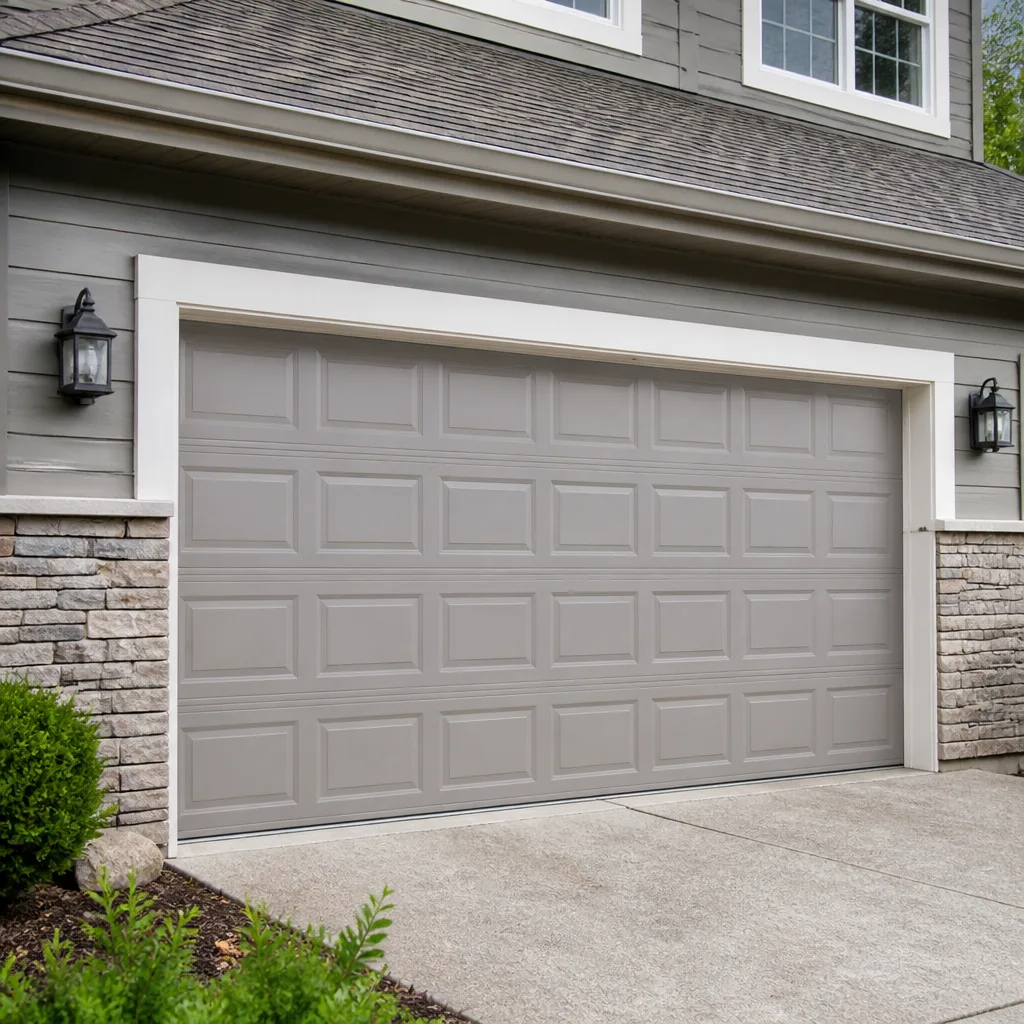 Raised-panel steel
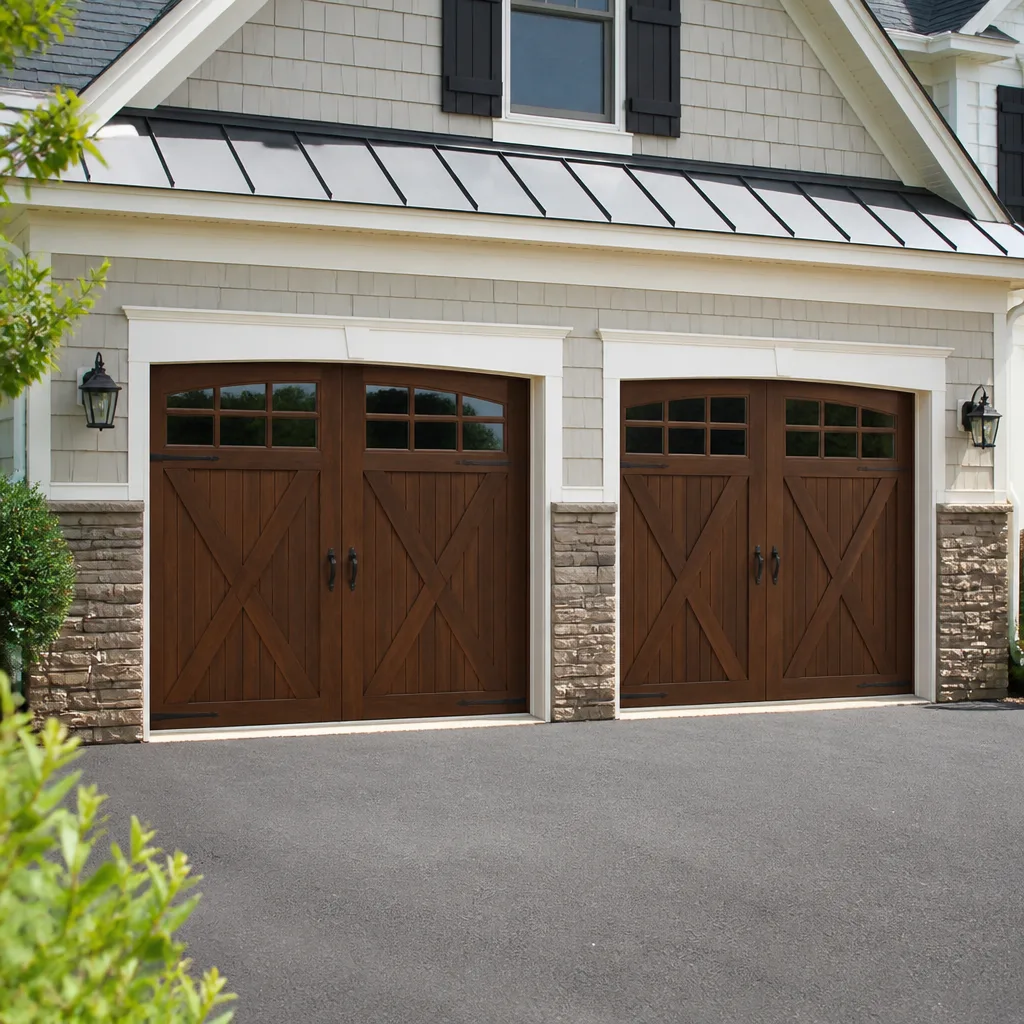 Carriage house
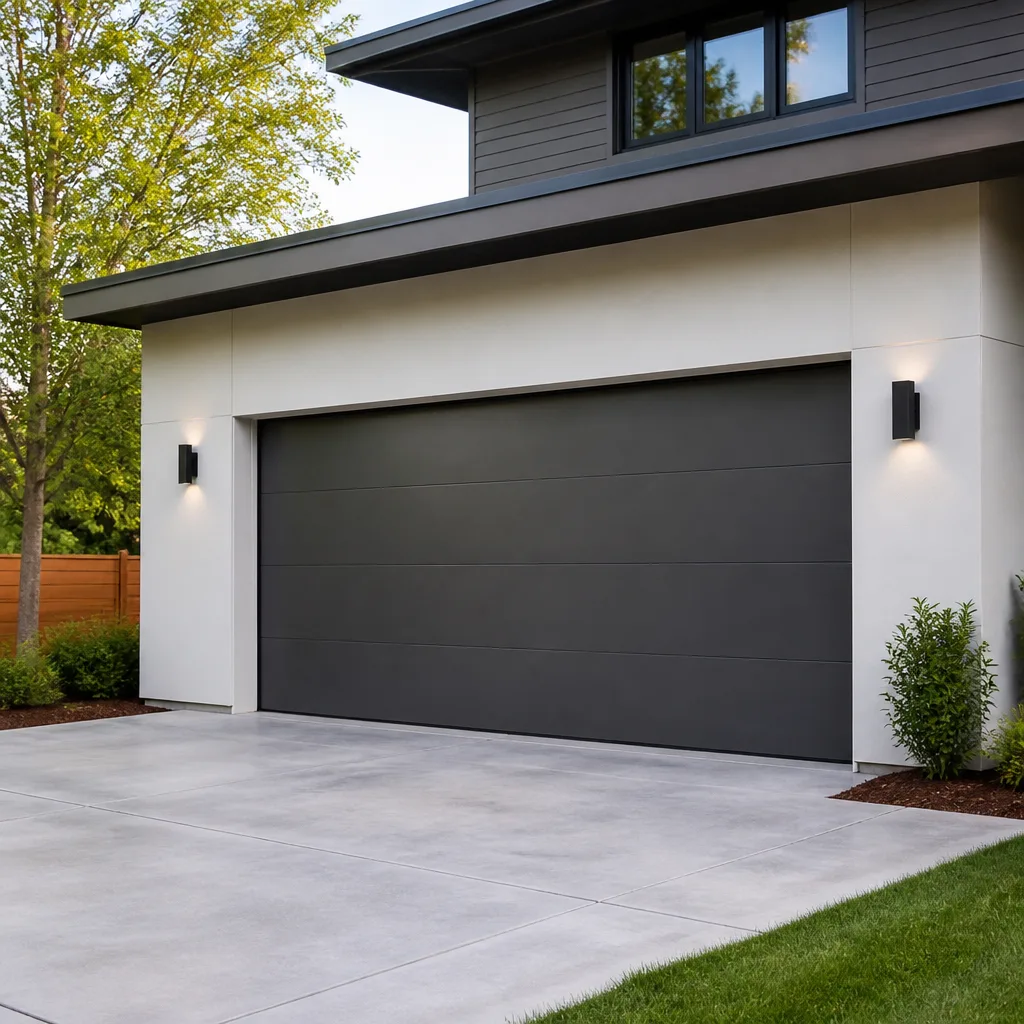 Modern flush
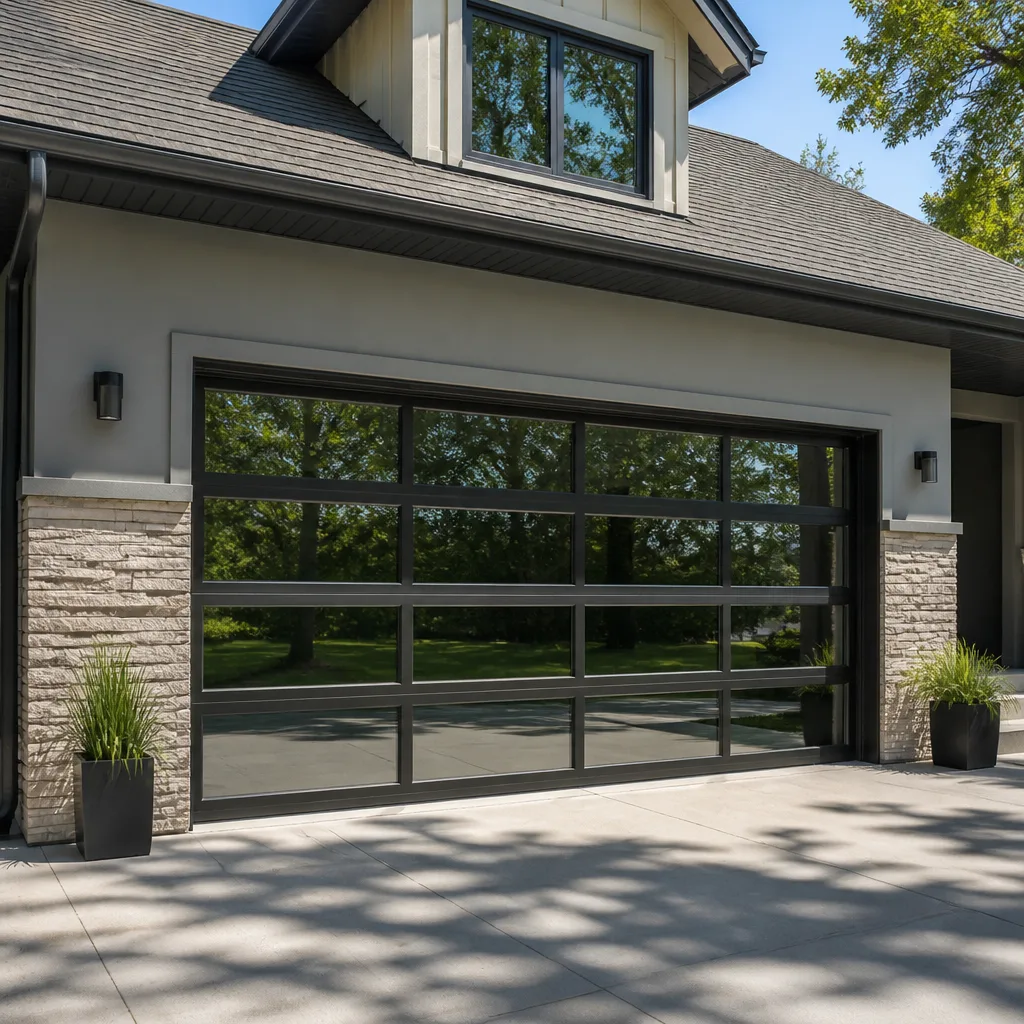 Full-view glass
 LiftMaster openers
 Chamberlain openers
Full 25-point door and opener safety check with every visit - springs, cables, rollers, tracks, and your LiftMaster or Chamberlain opener included
You get a price before we start. It does not change when the pro arrives.
Get your free estimateGarage Door Warning Signs: A Port Saint Lucie Homeowner’s Reference Guide
A garage door that hesitates for two seconds before it moves isn’t “just old.” That pause is information. It usually means the spring tension has drifted or the opener is working harder than it should to drag a door that’s binding somewhere in its track. Most of the failures we get called out for in Port Saint Lucie don’t arrive out of nowhere. They announce themselves first, quietly, in sounds and small movements that are easy to write off as normal for an aging door. This guide is about learning that language. You’ll learn how to map a symptom to the part that’s actually failing, which signs mean “schedule a repair soon” and which mean “stop using the door right now,” and how Florida’s humidity makes those signs show up differently here than the national guides describe.
Quick Answer
The most important garage door warning signs are a door that moves in jerks or hesitates before opening, grinding or snapping sounds, a door that drifts back down after you close it, and visible wear on the springs, cables, or rollers. Signs that mean stop using the door immediately are a snapped spring, a frayed or hanging cable, a door that won’t stay up, or any door that comes down unevenly. Catch the early signs and you’re looking at a routine repair; ignore them and you’re looking at an emergency.
Styles & brands we work with
- Raised-panel steel
- Carriage house
- Modern flush
- Full-view glass
- LiftMaster openers
- Chamberlain openers
Table of Contents
- Symptom-to-Cause Reference Chart
- Maintenance Soon vs. Stop Using the Door Now
- Why Florida Humidity Changes the Warning Signs
- How to Spot a Weakening Torsion Spring
- What a Struggling Opener Sounds Like by Brand
- The Visual Checks You Can Do Safely
- A Monthly Walkthrough in Six Steps
Symptom-to-Cause Reference Chart
The fastest way to understand what your door is telling you is to match the symptom to the system that produces it. Every garage door is a balance of spring tension, cable tension, track alignment, and opener force. When one of those drifts, the symptom shows up somewhere specific. Here’s the chart we use in the field, adapted for the doors we see across Port Saint Lucie neighborhoods like Torino and St. Lucie West.
- Loud bang from above the door, then the door won’t lift: a torsion spring has snapped. Stop using the door.
- Door hesitates or stutters at the start, then moves: spring tension is off or hardware is binding. Schedule service soon.
- Grinding, scraping, or squealing as the door travels: dry or worn rollers, or a track that’s out of alignment. Maintenance soon.
- Door drifts back down a few inches after closing: spring tension too weak or the opener’s travel limits are off. Schedule service.
- Door goes up crooked, one side lagging: a stretched or frayed cable, or a broken spring on one side of a two-spring setup. Stop and call.
- Opener runs but the door doesn’t move: a stripped gear in the opener, a broken spring, or a disconnected trolley. Diagnose before forcing it.
- Door reverses for no reason: safety sensor misalignment or a force setting that’s too sensitive. Schedule service.
- Visible rust streaks or orange dust near the springs and hinges: corrosion eating into the metal, common in humid climates. Inspection recommended.
Notice that a few of these are “stop now” and most are “soon.” That distinction matters, and it’s the next section.
Maintenance Soon vs. Stop Using the Door Now
Not every warning sign is an emergency, but some absolutely are. The rule of thumb: if the door’s weight is no longer being held securely by the spring system, stop using it. A torsion spring holds enormous stored energy, and when it fails it can release all at once. That’s why we treat springs as a safety issue, not just a repair item.
Signs that mean stop using the door now
- A loud bang followed by a door that won’t lift: a spring has broken.
- A cable that’s frayed, kinked, or hanging loose on one side.
- A door that won’t stay up when you lift it manually, or slams down hard.
- A door that comes down at an angle, with one side clearly lower.
- Any door that moves when the opener is disconnected, in a way you can’t control.
Signs that mean schedule maintenance soon
- Grinding, squeaking, or rumbling during travel.
- A door that hesitates briefly then works.
- An opener that seems to strain or labor more than it used to.
- Rollers that look flattened, cracked, or dry.
- A door that reverses unexpectedly on some closings but not others.
If you’re unsure which side of the line a symptom falls on, the safe call is to leave the door down and call for garage door repair. We can walk you through what you’re seeing before anyone touches the door. Safety comes first; a working door can wait a day, a serious injury can’t.
Why Florida Humidity Changes the Warning Signs
If you’ve read national garage door guides, you’ve noticed they talk a lot about cold weather. Frozen tracks, stiff springs, ice in the hinges. None of that applies in Port Saint Lucie, and the signs you should be watching for here look different. Our problem isn’t cold. It’s the humidity and the daily duty cycle the door runs in.
Humidity works on a garage door in three specific ways. First, it accelerates corrosion on the springs, hinges, and rollers. A torsion spring that’s still structurally sound but rusting on its surface can develop weak spots faster than a dry-climate spring would. Second, it makes rollers and hinges stick. When they stick, the door binds, and the opener has to work harder to compensate. Third, the opener itself ages differently here. A unit running against a binding door every day, in a humid garage, sees its motor and gear train wear faster than the same unit would on a dry, smoothly balanced door.
What this means for your walkthrough: rust patterns are a warning sign here in a way they aren’t elsewhere. Orange dust around a roller, a hinge that feels crusty, streaks of rust on the spring – those aren’t cosmetic. They’re early indicators that the door is fighting friction, and friction is what makes springs and openers fail early.
Summer heat across Port Saint Lucie adds a second layer. Thermal expansion on a south-facing metal door can cause the door to look slightly warped during the day, and to bind in its track at the hottest hours. If your door rubs or scrapes on hot afternoons but runs smooth at night, you’re seeing heat expansion, and the track or rollers need attention.
How to Spot a Weakening Torsion Spring
A torsion spring almost never fails without warning. It weakens gradually, and the weakening leaves traces you can see and feel if you know where to look. The spring is the horizontal coil above the door (torsion) or the vertical coil beside the track (extension). The signs of weakening are the same for both.
- Look for a visible gap in the coil. A healthy torsion spring looks like an unbroken coil. If you see a gap or a spring that looks stretched between coils, the spring has lost tension.
- Check for rust or dark spots. Localized rust streaks on the coils point to a weak spot that can snap under load.
- Lift the door halfway by hand. A balanced door should stay put roughly where you let go. If it rises on its own or drops fast, the springs are out of balance.
- Listen for a change in sound. A healthy spring produces a smooth, consistent hum as the door travels. A weakening spring produces a creak or a thump at a specific point in the cycle.
- Watch the door’s speed on open. If the door now opens more slowly or more quickly than it used to at a given point, the tension has drifted.
What you should never do is adjust, wind, or unwind a torsion spring yourself. The spring stores lethal energy, and a mistake on it can break bones or worse. Inspection and repair belong to a trained technician. If you suspect a weakening torsion spring, call us and we’ll inspect it safely. Our technicians have up to 10 years of experience with spring systems and know what a spring looks like right before it fails.
What a Struggling Opener Sounds Like by Brand
The opener brands in Port Saint Lucie homes fall into a handful of recognizable families – LiftMaster, Chamberlain, Genie, Clopay-openers aside, the drive systems from Craftsman and Genie are the ones we see on older homes. Each has its own signature when it starts to struggle. Knowing what yours sounds like when it’s healthy is how you’ll notice when it isn’t.
- LiftMaster and Chamberlain: quiet, belt or chain drives with a smooth ramp up and ramp down. When they struggle, you hear a rapid clicking or a strain at the moment the door starts to lift. If the opener runs but the door lags, suspect a stripped gear in the unit or a binding door, not the remote.
- Genie: chain and screw drives with a slightly more mechanical, even “gear-y” sound. A struggling Genie typically produces a louder rattle on the up cycle and a grinding that gets worse over a week or two. That’s often a worn drive gear or a slipping chain.
- Craftsman: classic chain drives that are typically louder by design. The sign of trouble isn’t extra noise so much as a change in rhythm – a pulsing or hesitation that wasn’t there before. That’s usually a force-limit issue or a worn gear.
- Universal symptom: any opener that reverses mid-travel, stops partway, or opens the door only a few inches is compensating for something else. That “something else” is usually a door problem, not an opener problem.
If your opener is struggling, a qualified technician can inspect the drive system and the door together. Our garage door opener repair covers the smart-home LiftMaster and Chamberlain units as well as the older chain-drive Genie and Craftsman systems that are still running all over Port Saint Lucie. We work on the brand you already own.
The Visual Checks You Can Do Safely
You don’t need to touch a spring or a cable to know whether your door is having trouble. A short visual walkaround, done every few months, catches most of the warning signs. Walk around the car, look up, look down, and look at the tracks. Nothing on this list requires you to loosen, adjust, or disconnect anything.
- Look at the spring: is the coil continuous, or do you see gaps, rust streaks, or dark spots?
- Look at the cables: do they run cleanly along each side, or is either one frayed, kinked, or hanging?
- Look at the rollers: are they round, clean, and firmly seated, or flattened, cracked, or coated in orange dust?
- Look at the tracks: are they straight, or has either side been bent or pulled away from the wall?
- Look at the hinges: are they clean and moving freely, or crusty with rust and debris?
- Look at the door panels: are they aligned with each other, or is one sagging or bowed?
- Look at the floor seal: is the bottom rubber intact, or has it weathered away to leave a gap?
If everything looks clean and even, you’re in good shape. If you see rust, sagging, or a spring that looks different from the last time you looked at it, that’s your cue to schedule a service visit. If a brand-name door – a Clopay, Amarr, or Wayne Dalton, for example – looks out of alignment, note it: the panel construction differs by brand, and knowing the door matters when we come out.
A Monthly Walkthrough in Six Steps
A monthly walkthrough takes five minutes and prevents most of the surprise failures we get called about in Port Saint Lucie. Do this from inside the garage with the door down and the opener disconnected.
- Look before you lift. Do the visual check above. Note anything that’s changed since last month.
- Lift the door by hand. A balanced door moves smoothly and stays roughly where you let go. If it drops, rises, or sticks, that’s a spring or track problem.
- Lower it slowly and listen. Any grinding, scraping, or thumping means a roller or track needs attention.
- Reconnect the opener and cycle the door once. Watch for hesitation, uneven movement, or a door that reverses before it fully closes.
- Test the safety sensors. Wave an object in front of the beam. If the door doesn’t reverse, the sensor is misaligned or failing.
- Test the manual release. Make sure the emergency pull handle works from inside. You don’t want to discover a stuck release during a real emergency.
Log what you find each month. A door that “seems a little slower” in January and “seems a lot slower” in June is telling you exactly what’s failing. When you notice the trend, book a service call and let a trained technician handle the adjustment and repair. For a new door rather than a repair, we also handle garage door installation for the same brands we service.
Common Mistakes to Avoid
- Assuming “a little slow” is normal. A door that used to open in five seconds and now takes ten is telling you the spring or the opener is failing, not that it’s just getting old.
- Spraying WD-40 on the springs and calling it maintenance. Solvent-based sprays strip the protective coating and accelerate rust in humidity. It also does nothing for the tension.
- Adjusting the opener’s force limit to compensate for a binding door. Cranking up the force setting masks the symptom and wears out the door faster. Fix the binding door instead.
- Ignoring rust on the springs and hinges. In a Port Saint Lucie garage, rust is the first sign the door is fighting friction, and friction is what kills springs and openers.
- Replacing the opener when the door is the problem. An opener that lifts a struggling door will struggle too. Diagnose the door first, then the opener.
- Putting off a spring inspection because the door still opens. A spring can lose most of its tension and still lift the door – on a slow, strained opener that’s doing all the work.
- Working on the spring or cable yourself. This isn’t a weekend DIY project. Spring and cable work needs a trained technician, and getting it wrong is how people get seriously hurt.
See the difference
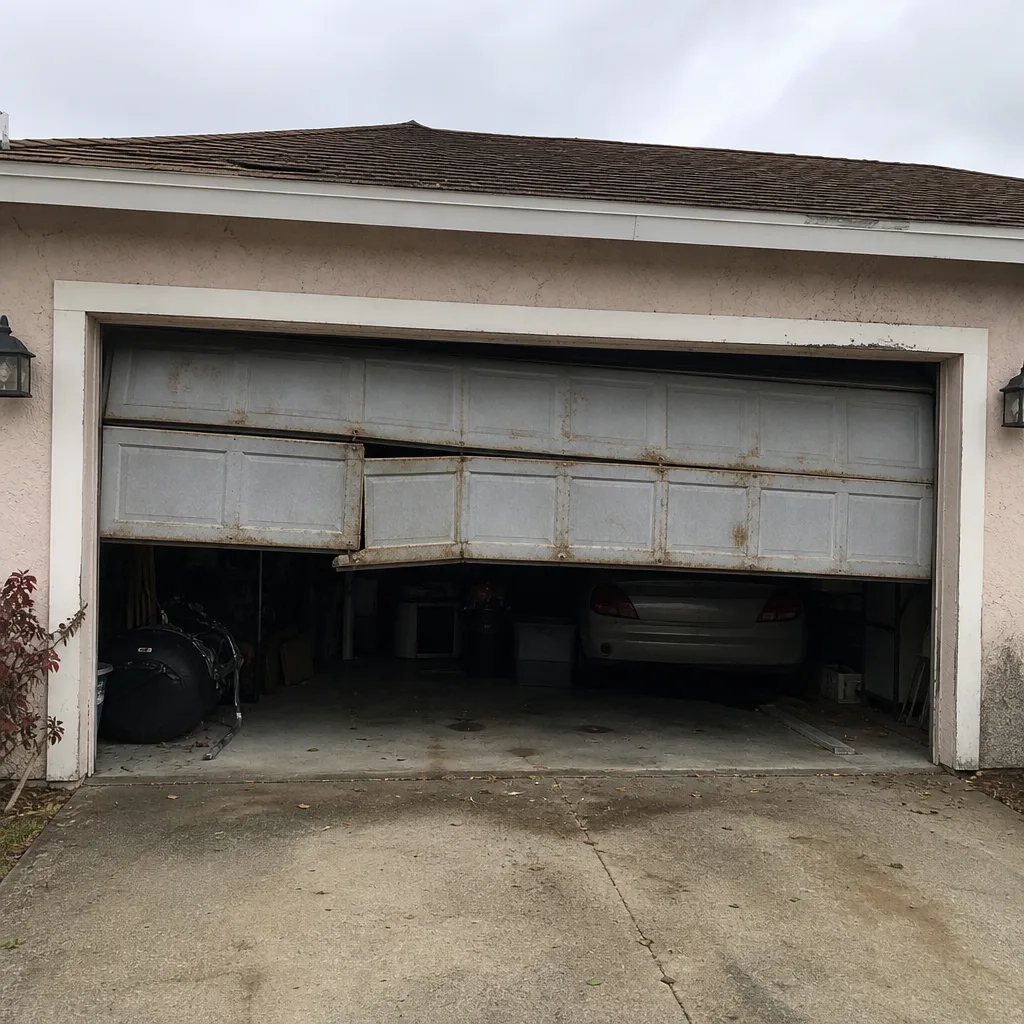 Before
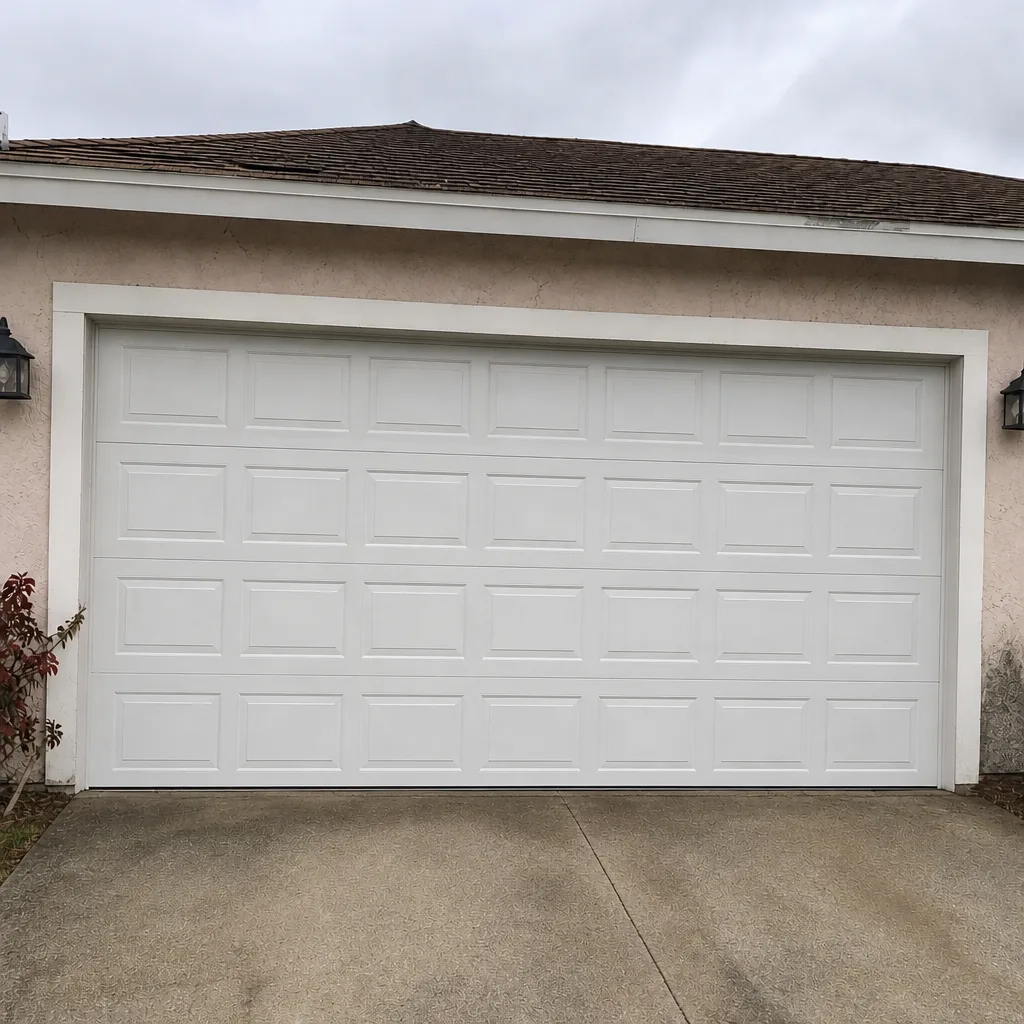 After
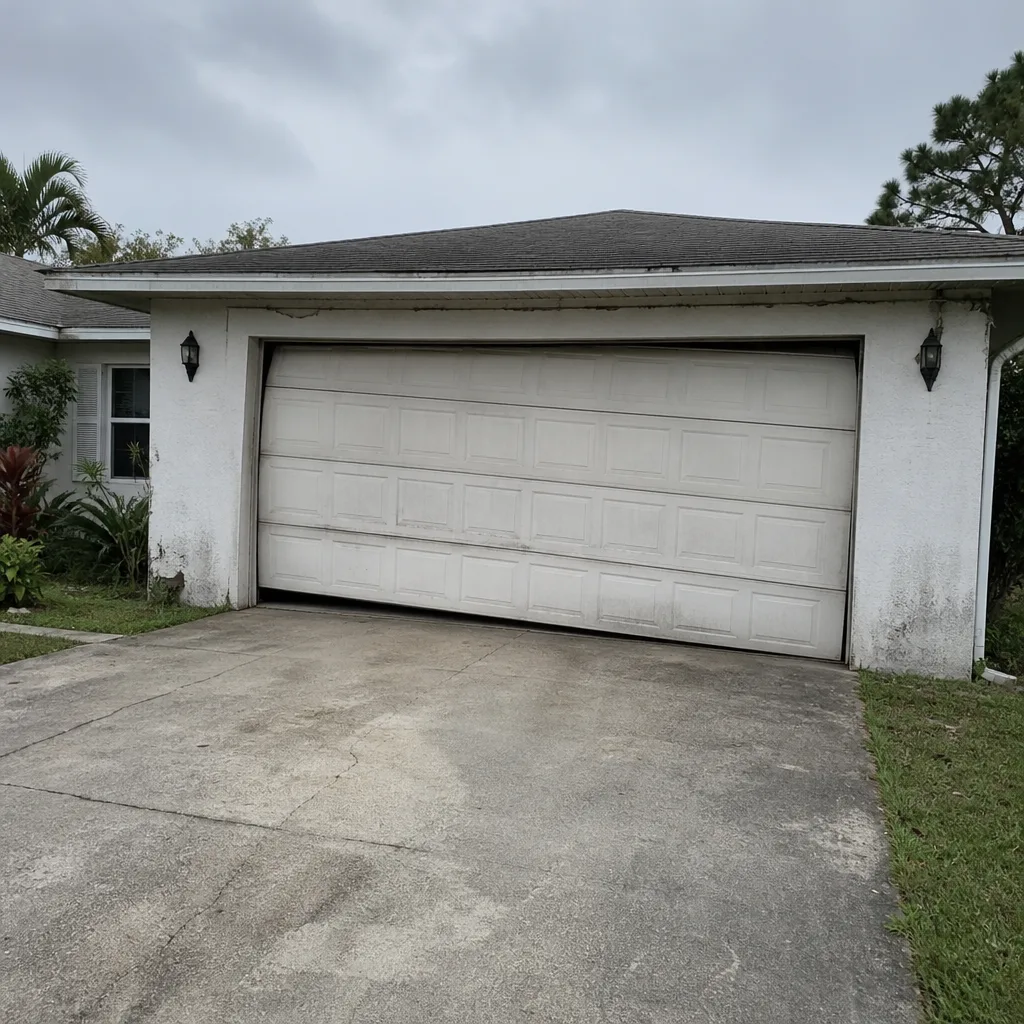 Before
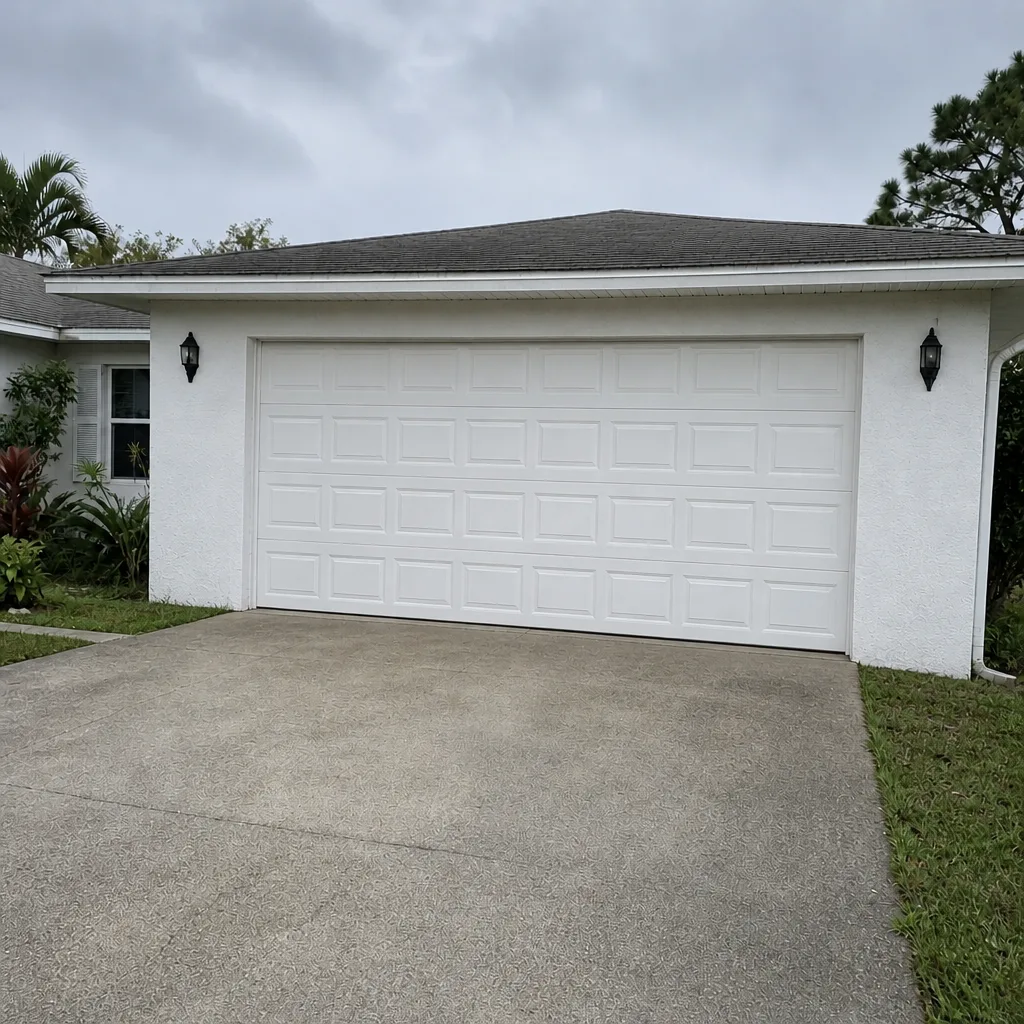 After
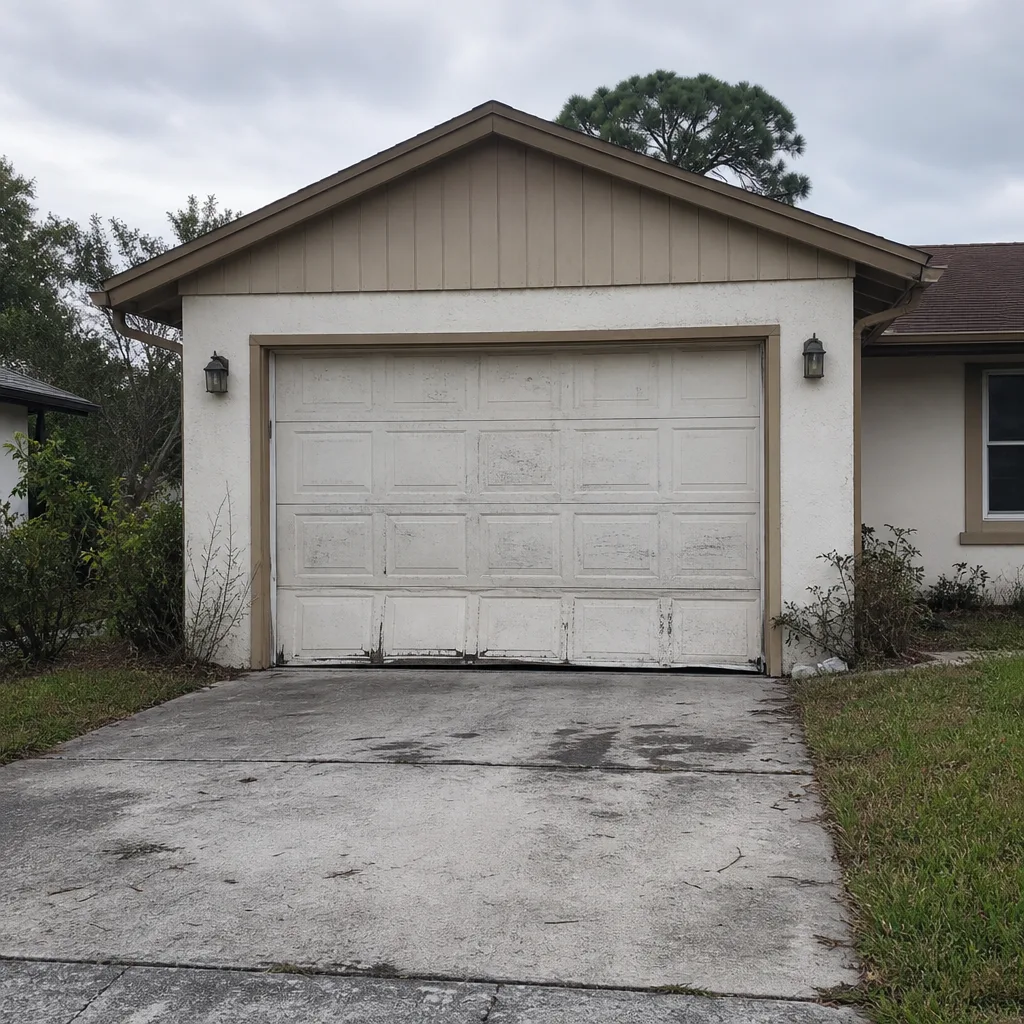 Before
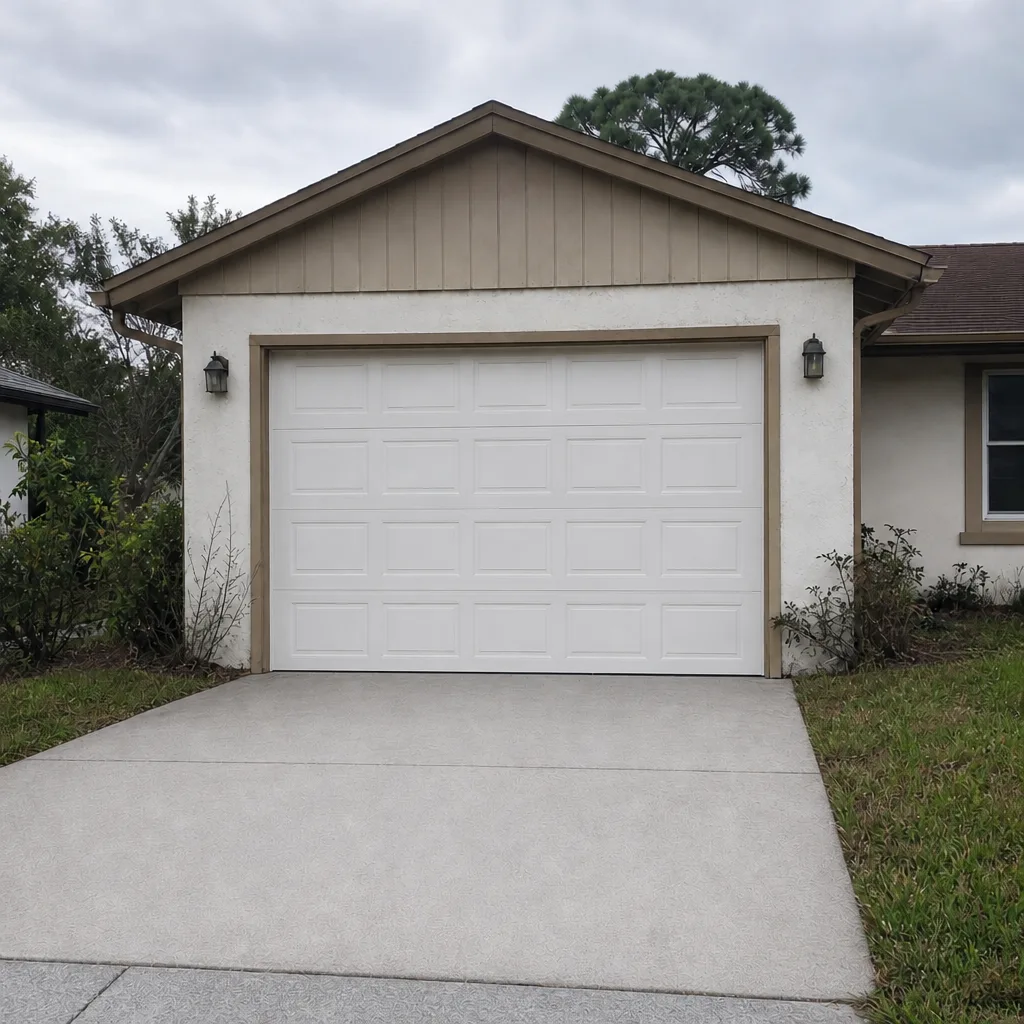 After
When to Call a Professional
Call a professional if any of the “stop now” signs apply: a snapped spring, a frayed cable, a door that won’t stay up, or a door that comes down crooked. Call us sooner rather than later for the “soon” signs – grinding, hesitation, rust streaks, or an opener that’s straining – because those are the ones that turn into emergencies. If you’re not sure whether a symptom is serious, call and describe it. We’d rather tell you it’s fine than have you find out the hard way. Port Saint Lucie Garage Door Repair Co offers free estimates in Port Saint Lucie – call (833) 932-4537.
Frequently Asked Questions
The most common warning signs are a door that hesitates before moving, grinding or squealing during travel, a door that drifts back down after closing, rust or dark spots on the spring coil, and an opener that sounds strained. These signs usually point to a spring, roller, track, or opener that’s failing slowly. Catching them early keeps the repair small. Call (833) 932-4537 for a free estimate if you’re seeing any of these.
Look for a visible gap in the coil, rust streaks, or dark spots on the spring, and lift the door halfway by hand to check whether it holds position. A weakening spring also changes the door’s speed or produces a thump at a specific point in the cycle. If you suspect a failing spring, do not run the door and do not try to adjust the spring yourself: call a trained technician. Call (833) 932-4537 and we’ll inspect it safely – estimates are free.
Port Saint Lucie’s heat and humidity change which warning signs appear first. Instead of frozen tracks and stiff springs, the local problems are rust on springs and hinges, sticking rollers, and openers straining against doors that bind. Afternoon heat also causes metal doors to expand and scrape on hot days. Watching for rust and friction, not ice, is how you catch a local failure before it happens. Call (833) 932-4537 if you’re seeing rust or scraping.
Roller cleaning, hinge lubrication, and visual checks are safe for you to do yourself. Spring adjustments, cable replacement, track realignment, and opener gear repairs are not – those need a trained technician. Springs and cables store dangerous energy, and a mistake on either can cause serious injury. Call (833) 932-4537 for the repairs that aren’t safe to do alone.
A struggling opener typically sounds like a rapid click, a grind, or a rattle during the up cycle, and it may reverse or stop partway through travel. On LiftMaster and Chamberlain units the sign is often a strain at the moment the door starts to lift. On Genie and Craftsman chain-drive units it’s usually a louder-than-usual rattle or a grinding that worsens over a week. Call (833) 932-4537 for an opener repair estimate.
A quick visual walkaround once a month, plus a careful point-by-point check every season, catches almost every problem early. A monthly habit catches more than an annual one because you’ll notice small changes from one pass to the next – a slower cycle, a new rattle, a streak of rust that wasn’t there last month. Call (833) 932-4537 when you want a professional inspection, and estimates are free.
The Bottom Line
Garage door failures in Port Saint Lucie almost never happen without warning. A door that hesitates, grinds, drifts, or shows rust is telling you which component is failing, and the sooner you read the sign, the smaller the repair. Learn the symptom-to-cause chart, know the difference between “schedule soon” and “stop now,” and watch for the humidity-driven signs that look different here than in colder climates. Springs are the part to watch most closely, because they hold dangerous energy and can fail without drama until the moment they snap. If something on your door feels or sounds different, call us and let a trained technician take a look. One call covers it.
Talk to Us About Your Door
If any warning sign in this guide matches what your door is doing, don’t wait for it to become an emergency. Port Saint Lucie Garage Door Repair Co handles repair, springs, openers, parts, and new-door installation for the eight major brands homeowners actually own – LiftMaster, Chamberlain, Genie, Clopay, Amarr, Wayne Dalton, Craftsman, and Raynor. We quote the price before any work starts, so you know what you’re paying before we touch the door. Call (833) 932-4537 for a free estimate in Port Saint Lucie, and start with Port Saint Lucie Garage Door Repair Co when you’re ready to schedule.
Written by the team at Port Saint Lucie Garage Door Repair Co.